- Inceptly
- Posts
- A banned claim + an illegal hook = a $1.4M ad formula💰
A banned claim + an illegal hook = a $1.4M ad formula💰
When a video ad generates an estimated 1.4 million USD in ad spend, it's not running on hope - it's working. That level of investment signals consistent performance, profitable returns, and a formula worth studying. The "Clarity Blue glasses" ad we're dissecting today is a masterclass in applying traditional direct response principles to modern video advertising, specifically for social media feeds where attention is the scarcest commodity. |  Author: |
What makes this ad fascinating is how it layers multiple lead archetypes from Michael Masterson and John Forde's "Great Leads" framework into a seamless two-minute narrative. This isn't a simple application of one technique - it's a sophisticated blend that moves viewers through multiple awareness levels, from pattern-interrupt to purchase-ready, all while they're casually scrolling their feed.

Want to brainstorm with us on new ways to scale your business with YouTube Ads (and other performance video platforms)?
Join us for a free YouTube ad brainstorming session here:
Let's break down exactly how this ad uses proven direct response principles to achieve its success.
The proclamation lead that stops the scroll
"Should these glasses be illegal in the US?"
In the first four seconds, the ad deploys a textbook Proclamation Lead - the technique Masterson and Forde identify as ideal for "jarring the unaware reader with a surprising, shocking, or bold statement." This isn't accidental. In a social media environment where users scroll past dozens of ads per minute, you need a pattern interrupt that makes the thumb stop moving.
The proclamation lead works because it creates immediate cognitive dissonance. Glasses... illegal? The question doesn't compute, which forces the brain to pause and seek resolution. This is exactly what Masterson and Forde describe: a lead that "disarms skepticism and creates curiosity."
But the ad doesn't stop with the opening question. It reinforces the proclamation with the bold claim that these glasses are "already banned from Amazon, Walmart, and Home Depot for being too powerful." The visual shows these logos with "BANNED" stamped across them. This is the classic proclamation technique of returning to your shocking theme throughout the copy - and notably, at the close, just as Masterson and Forde recommend.

The hammer-smashing-glasses visual in the opening seconds provides crucial reinforcement. While the audio delivers the verbal shock, the visual delivers physical impossibility - glasses that shouldn't survive such abuse. This dual-channel proclamation creates a compound impact.
The risk with proclamation leads is credibility. Make a claim too outrageous, and you lose trust. The ad manages this by immediately pivoting to social proof: "Nobody believed me at first, but now everybody wants a pair." This acknowledges the natural skepticism while promising it can be overcome - just as the viewer is experiencing that same skepticism.
After the proclamation hook, the ad seamlessly transitions into a Story Lead: "My friends roasted me for buying Miracle Glasses online. They said I got scammed, but then I showed them what they could do. Now they're all begging me to send them the link."
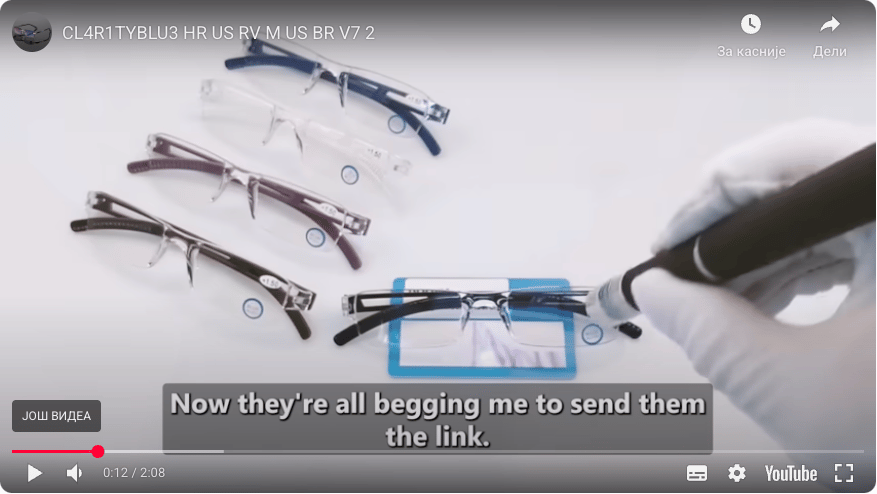
This is direct response storytelling at its most efficient. In just 15 seconds, we get:
A relatable protagonist: Not an expert or celebrity, but an everyday person who made a purchase online (something viewers do constantly)
Conflict and stakes: Social embarrassment, the fear of being scammed, peer ridicule
Resolution and vindication: The friends who mocked now desperately want what he has
An implied promise: You too will go from doubted to envied
Masterson and Forde emphasize that story leads must feature "a protagonist the reader can identify with" and present "a conflict or situation that evokes emotion." This ad nails both. The emotional journey from embarrassment to vindication is one every viewer has experienced or fears experiencing.
Notice what the story does strategically: it acknowledges the exact objection viewers are likely feeling ("this is a scam") and then demolishes it through social proof. The friends aren't just convinced - they're "begging" for the link. This hyperbolic desire from initially skeptical sources is powerful testimony.
The story also creates aspiration. By the end, viewers don't just want glasses that work - they want glasses that make their friends jealous. The final call-to-action cleverly returns to this theme: "before your friends start begging for the link." The product becomes a status symbol, not just a functional tool.
The problem-solution structure hiding in plain sight
While the ad opens with a proclamation and a story, its backbone is a classic Problem-Solution Lead. The genius is how subtly it's structured. Rather than leading with problems (which might depress viewers), it embeds problem-solving throughout the "seven reasons" framework.
Let's identify the problems being solved:
Problem: Need multiple pairs of glasses for different distances
Solution: "They adjust automatically... from 100 to 700 diopters."
Problem: Digital eye strain and UV exposure
Solution: "They protect your eyes from harmful blue light and UV rays."
Problem: Uncomfortable, heavy glasses
Solution: "At just 1.5 grams, there's no nose pinching or ear pressure."
Problem: Expensive, recurring optometrist visits
Solution: "No doctor visits, no eye tests, no prescription needed."
Problem: Fragile glasses that break easily
Solution: "Impact resistant... drop them, bend them, toss them in your bag."
This problem-solution architecture addresses what Masterson and Forde call the "solution-aware" prospect - someone who knows they want better vision correction but isn't aware this specific solution exists. The ad doesn't need to convince viewers they have vision problems (they already know). It needs to position this product as a superior alternative to existing solutions.
The "seven reasons" format is psychologically smart. It promises comprehensive coverage of benefits while creating a mini-checklist in the viewer's mind. As each reason is checked off, commitment builds. The visuals reinforce each claim - we see the glasses being hammered, bent, stepped on, used while reading, driving, and on computers.
What prevents this from becoming the "tossed salad" approach Masterson and Forde warn against? The through-line remains consistent: ultimate convenience through technological superiority. Every reason supports the singular big idea.
The Rule of One (despite seven reasons)
Speaking of that big idea - let's talk about how this ad adheres to Masterson and Forde's most fundamental principle: The Rule of One.
At first glance, an ad listing seven distinct reasons might seem to violate this rule. Aren't we supposed to focus on one idea, one emotion, one benefit? But look closer at what's actually happening.
The ONE big idea: Perfect vision without the traditional hassles - no prescriptions, no doctor visits, no multiple pairs, no compromise. This is encapsulated perfectly in the line: "It's like getting perfect vision on demand."
The ONE core emotion: Liberation. Freedom from the tyranny of the traditional vision correction system. Every feature ladders up to this emotional payoff - you're free from doctors, free from multiple pairs, free from expensive visits, free from fragility concerns.
The ONE desirable benefit: "One pair does it all." This phrase is the emotional crescendo. It's not about seven different benefits - it's about the singular benefit of simplicity replacing complexity.
The ONE response: "Click below, grab your Clarity Blue glasses, and start seeing clearly today." Despite multiple touchpoints throughout the ad, there's only one action requested, delivered at the optimal moment after proof has been established.
The seven reasons don't dilute the message - they prove it. Each one is evidence supporting the core claim that these glasses eliminate all the traditional pain points of vision correction. This is how you can have multiple supporting points without violating the Rule of One: ensure they all ladder up to a single, unified promise.
The offer architecture and urgency mechanics
The ad saves its direct Offer Lead elements for the close, which is strategically sound. Masterson and Forde note that offer leads work best with "highly aware customers who are ready to buy." By placing the offer after two minutes of proof, storytelling, and benefit stacking, the ad has transformed initially unaware scrollers into warmed-up, ready-to-buy prospects.
The offer structure hits every classic direct response element:
Discount: "50% off" - Clear, significant, immediately understood value
Risk reversal: "30-day money-back guarantee" - Removes purchase anxiety
Scarcity: "But this deal won't last long. Once they're sold out, they're gone." - Creates urgency without being overly aggressive
Reason why: The "banned from major retailers" claim provides the reason for the direct-to-consumer offer and the limited availability
Notice the elegant problem restatement in the final call-to-action: "If you're tired of blurry vision, eye strain, and expensive optometrist visits..." This reminds viewers of their pain points right before presenting the solution, a classic closing technique.
The final line - "before your friends start begging for the link" - brilliantly returns to the story lead opening, creating narrative closure while adding social proof urgency. It's not just FOMO about the product running out; it's FOMO about missing the chance to be the person who discovers it first.

Layered techniques for modern attention
What makes this ad worth $1.4 million in ad spend isn't any single technique - it's the sophisticated layering of multiple direct response principles adapted for the scroll-stopping requirements of social media video.
It opens with a Proclamation Lead to stop the thumb. It transitions to a Story Lead to build identification and proof. It structures Problem-Solution benefits throughout to address objections. It maintains the Rule of One despite multiple claims. And it closes with a clean Offer Lead for ready buyers.
Most importantly, it understands customer awareness levels and guides viewers through a journey - from unaware scrollers to solution-aware prospects to product-ready buyers - all in 120 seconds.
Masterson and Forde's frameworks, developed for long-form sales letters, prove remarkably adaptable to modern video. The principles don't change. The medium does. And this ad shows exactly how to make that translation work.
Let’s break down your funnel and see where scale is hiding!
Most brands wait too long to find out why YouTube isn’t working. We’ll show you what to test — and what to kill:
🎯 Inceptly’s top picks:
Essential reading you can't afford to skip

An AI-generated Tai Chi ad just blew past $500k in YouTube spend in under a month, and it’s not winning because it’s AI.
It’s winning because the structure is sharp: a contrarian hook that instantly reframes the “right” way to exercise after 50, a natural two-person dialogue that handles objections without sounding salesy, and a tiny commitment that feels impossible to say no to.
We broke down the exact framework and how you can adapt it to your own offers.

Ever checked Google Ads at night, saw “yesterday” tank, and started panicking… then two days later it magically looks fine?
Nothing “fixed itself.” Google just reassigned late conversions back to the original click day, meaning yesterday’s numbers were never final. Most “bad days” are unfinished data.
In the full post, we’ll show how to track that lag so you stop reacting to noise and start making calmer decisions.
 | Jelena Denda Borjan, Staff Writer Drawing from her background in investigative journalism, Jelena has an exceptional ability to delve into any subject, no matter how complex, dig deep, and present information in a clear and accessible manner that empowers readers to grasp even the most intricate concepts with ease. |
Get in touch with us by responding to this email or tagging us on LinkedIn or Instagram and sharing your thoughts. Your feedback helps us keep our newsletter relevant and interesting.
