- Inceptly
- Posts
- 💰High-spend ads for surprisingly cool products
💰High-spend ads for surprisingly cool products
Hi all! Today, I chose to analyze 3 specific ads that recently caught my attention. |  Author: |
Crazy good, right?
The mentioned ads are:
A pain relief gadget with $1.1M in ad spend
A countertop grow system ($1.3M)
A dictation productivity tool ($3.2M)
On the surface, these look like three unrelated winners.
Yet they share the same “million-dollar” creative logic:
They start with a specific, felt problem (knot pain, wasted herb packs, typing hell after meetings).
They position a single enemy (surface-level pressure, grocery-store waste, messy dictation).
They introduce a mechanism that feels inevitable (lift vs push, controlled grow system, intent-aware dictation).
They show it working, so your brain stops arguing.
They compress time (10 minutes, 4 to 6 weeks with minimal work, 1 minute demo to “quadruple speed”).
This is why they scale. They do not rely on vibes or brand love. They build belief fast!
Want to brainstorm with us on new ways to scale your business with YouTube Ads (and other performance video platforms)?
Join us for a free YouTube ad brainstorming session here:
Let’s break down how each one does it, and what you can ‘swipe’ yourself!
✨ Ad 1: Revo smart cupping system ad
First up, we have this cupping gadget ad, check it out:
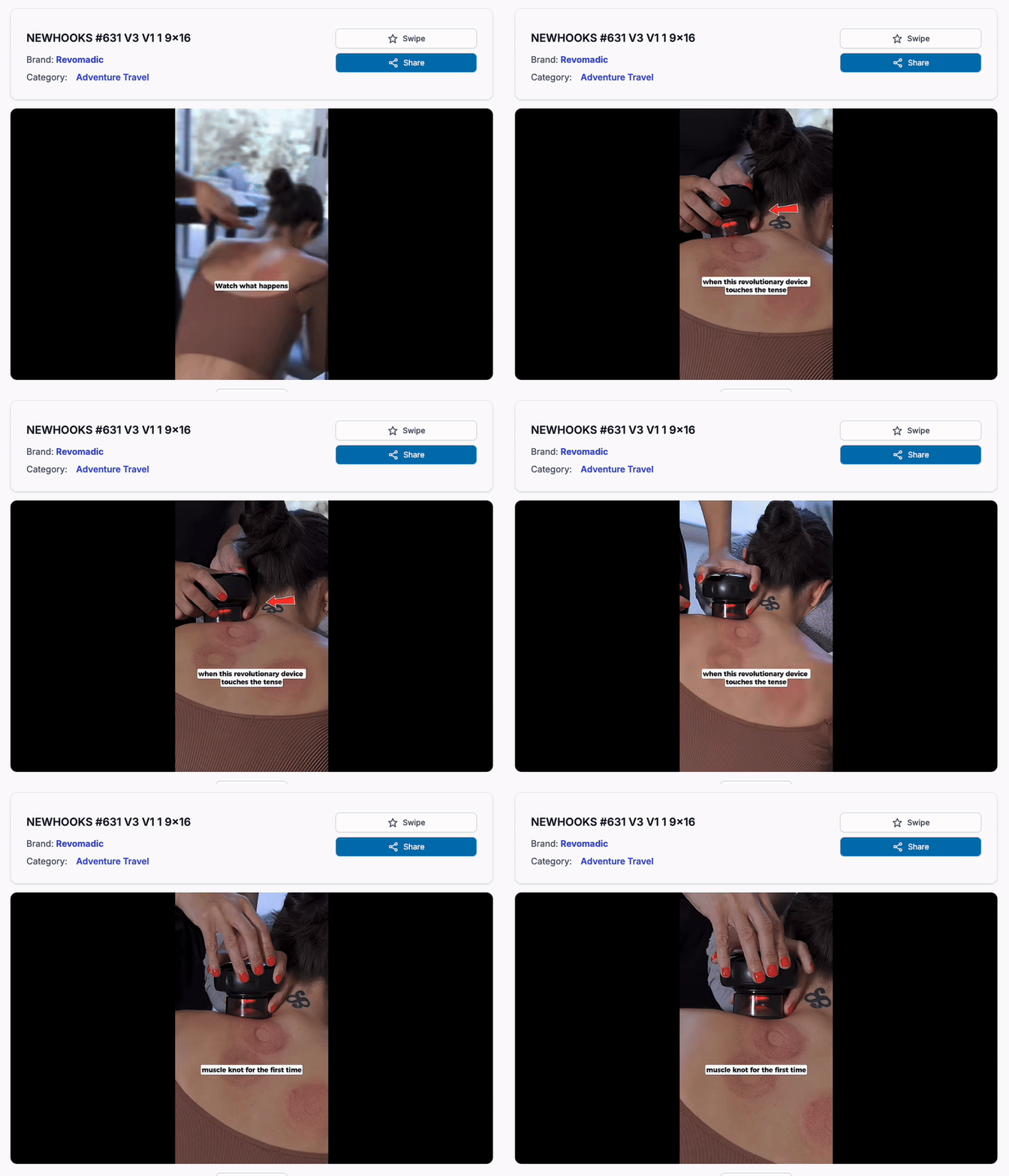
Here’s what this ad’s statistics look like:
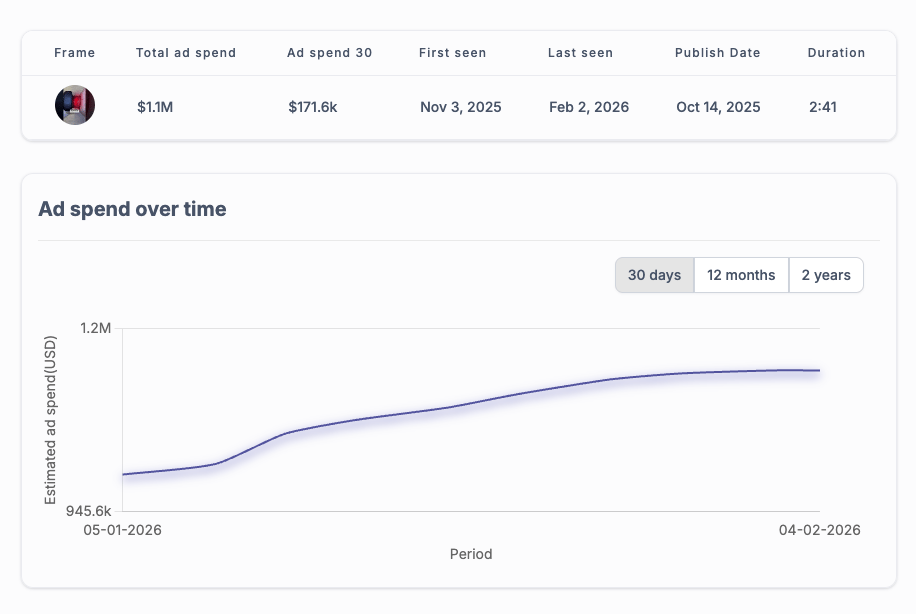
Stats snapshot:
Estimated spend: $1.1M
Last 30 days: $171.6K
Length: 2:41
Now, actually, what makes the ad work so well?
1) The hook is a promise + visual proof setup
“Watch what happens when this revolutionary device touches the tense muscle knot…”
That line is doing two jobs at once: it makes a claim, then forces the viewer into “show me” mode.
2) It wins by attacking substitutes, not competitors
Foam rollers. Tennis balls. Expensive massages.
This is important because it reframes the buyer’s current behavior as the real problem: money spent, short-lived relief, stuck in a loop.
3) The mechanism feels “medical enough” without needing credentials
Instead of “it feels great,” the ad explains why relief happens:
“Muscles aren’t just tight, they’re starved” (blood, oxygen, space)
Traditional massage “pushes down” (the enemy action)
Revo “lifts up” using suction (the new action)
Then it stacks three “clinic-coded” features: heat + red light + suction. The stack creates value without having to talk price.
4) It sells identity-level outcomes, not pain relief
Movement back. Sleep back. Confidence back.
The product becomes a path out of a life that has been getting smaller.
5) It closes with urgency that matches supply logic
Discount + “sell out today” + “next shipment in 3 weeks.”
Even if you hate urgency, the line works because it is aligned with physical inventory reality.
Moves to swipe:
Substitute teardown: Pick 2 to 4 things the buyer already tries and explain why they fail in one clear sentence each.
One enemy action vs one hero action: push down vs lift up is the entire ad in two verbs.
Therapy stacking: Combine 2 to 3 “recognized” modalities so the buyer feels like they are replacing a whole routine.
Multi-unit demand angle: “people buy three” is a sneaky way to signal satisfaction and justify price.
🌱 Ad 2: AUK countertop growing system ad
This next ad is really cool! It’s advertising a countertop plant growing system:
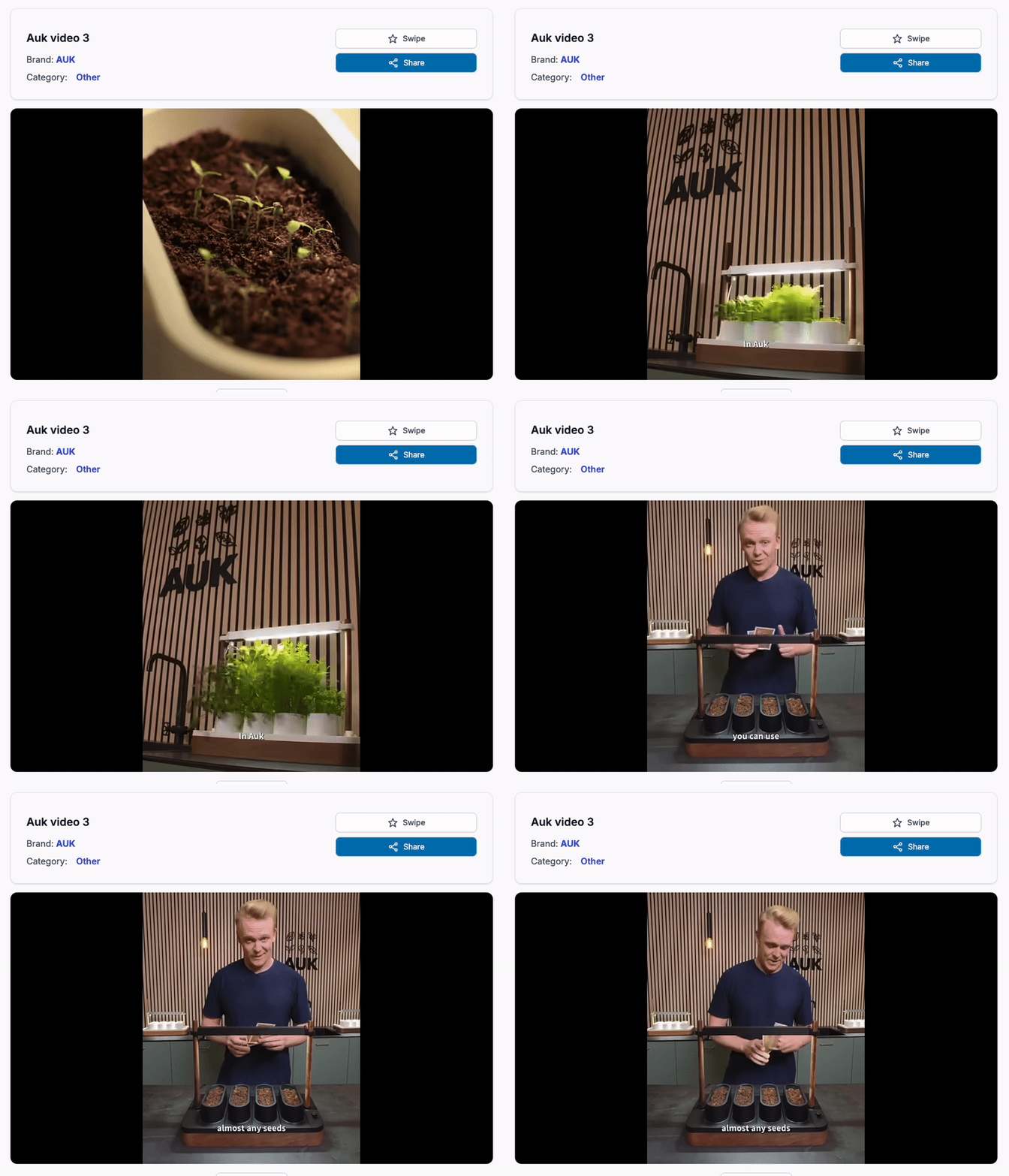
Now, here’s what this ad’s statistics look like:
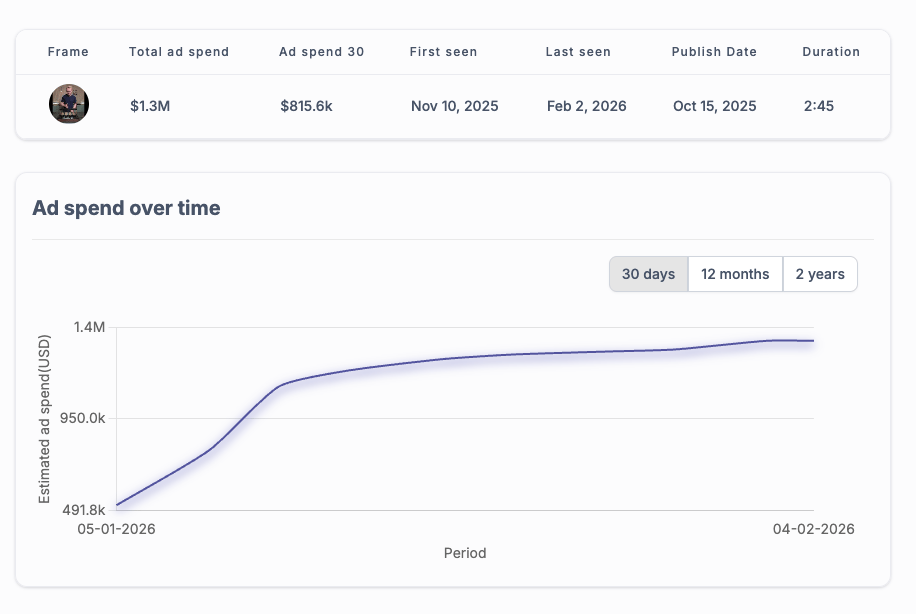
Stats snapshot
Estimated spend: $1.3M
Last 30 days: $815.6K
Length: 2:45
This is a very different style. It is calm, instructional, and almost like a product onboarding video. That is the point.
What makes it work?
1) The ad sells certainty through process
It starts in the dirt. Seeds. Coco fiber. Light distance. Water indicator. Nutrient pumps.
Instead of trying to hype, it removes anxiety. It is designed for the buyer who thinks, “I’ll mess this up.”
2) It replaces “claims” with “steps”
Notice how often it says the info is “on the back of the seed package” or “on the bottle.”
That makes the product feel real and thought-through. It signals: no guesswork, no secret knowledge.
3) The mechanism is simplicity, not innovation
The pitch is not “breakthrough tech.”
The pitch is “your kitchen counter becomes a reliable supply of fresh herbs.”
4) It hits two emotional payoffs without drama
Always fresh herbs available
No more buying one pack for one meal and throwing it away with plastic packaging
That second line is a guilt-free savings story. People love feeling smart and less wasteful.
5) It quietly introduces continuity value
“Last anywhere from 6 to 12 months”
“Harvest bit by bit”
This frames the purchase like a long-running asset, not a one-time gadget.
Moves to swipe:
Teach, then sell: If your product has “user error fear,” instruction is persuasion.
Anchor details: exact light distance, pump counts, water indicator. Specifics create trust.
Make the outcome tangible: “little oasis on your kitchen counter” is a visual, not a claim.
Make replacement easy: “throw out old plants, add new fiber, start back up” removes friction.
📱 Ad 3: A Whispr Flow ad
Our last ad pick for today is for a really interesting app, check it out:
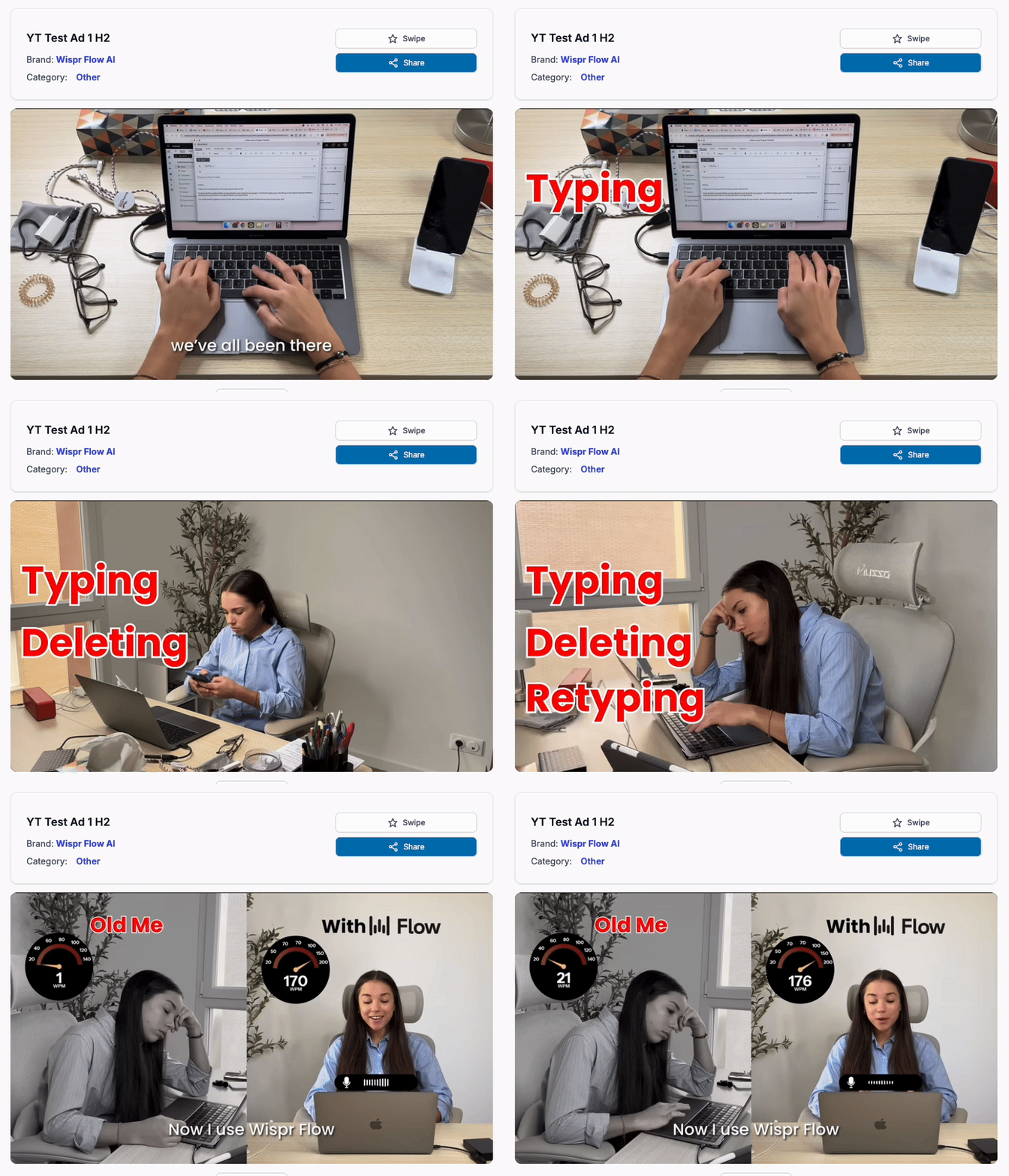
And here’s what this ad’s statistics look like inside VidTao:
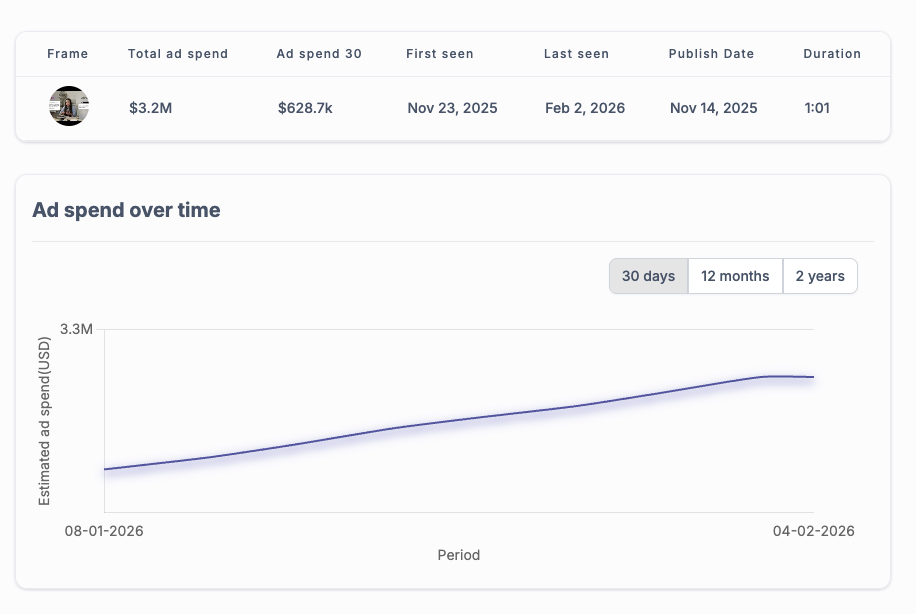
Stats snapshot
Estimated spend: $3.2M
Last 30 days: $628.7K
Length: 1:01
This one is short, modern, and built like a clean demo ad.
Here’s what makes it work:
1) The opening is pure relatability
“Why does composing one email about the meeting take longer than the entire meeting?”
It instantly earns attention because the viewer has lived it.
2) The product promise is framed as freedom, not features
“Break free from your keyboard”
That is an identity upgrade for busy people.
3) The demo is a simple head-to-head comparison
They compare dictation into Siri versus Whispr Flow.
The key is not “accuracy.” The key is intent. Whispr Flow “understood what I was trying to say” and outputs clean, formatted text.
4) The integration list expands the market in 6 seconds
Gmail, ChatGPT, iMessage, WhatsApp, Slack, Cursor.
This does two things: it increases perceived usefulness, and it helps the viewer self-identify: “I live in those tools.”
5) The closing metric is a single, memorable number
“4x typing speed”
It is a clean mental shortcut. No over-explaining.
Moves to swipe:
Start with the annoying moment, not the solution.
Show the “before” in a way that is slightly painful. Messy dictation output is perfect.
Prove the benefit inside real workflows. Integration lists work when they mirror daily life.
End with one number the buyer can repeat. 4x is sticky.
What you can apply to your next creative batch
1) Pick one verb that defines your mechanism
If we take these ads as examples, it’s:
Revo: lift
Auk: grow
Whisper Flow: think
2) Build your script like a belief ladder
Problem the viewer already agrees with
Enemy they already suspect
New explanation that feels true
Demo that ends debate
Low-friction next step
3) Use specificity as your trust shortcut
Numbers, distances, durations, steps, visible comparisons.
Not “trust me,” but “look how it works.”
4) Match tone to category risk
Pain relief needs more justification and “why it works.”
Home growing needs confidence and simplicity.
Software needs speed and proof inside workflows.
These ads aren’t million-dollar ads because they looked expensive - but because they made the outcome feel inevitable, then demonstrated it.
This is exactly what you should be modeling after! 😉
Want to brainstorm with us on new ways to scale your business with YouTube Ads (and other performance video platforms)?
Join us for a free YouTube ad brainstorming session here:
| Kristina Jovanovic, Social Media Manager & Content Writer Fascinated by human behavior, Kristina graduated with a degree in Psychology and joined our agency to put her knowledge to good use as a Media Buyer. She later transitioned into her current role, where she draws on her knowledge of the human psyche and marketing strategy, as well as hands-on experience in creative development and media buying at Inceptly, to share useful insights with our readers. |
🎯 Inceptly’s top picks:
Essential reading you can't afford to skip

Scaling usually doesn’t break accounts. Scaling with slow decisions and siloed systems does.
When budgets climb, the auction changes fast, creatives fatigue faster, and “we need more data” becomes an expensive reflex.
In this post, we break down the 4 kinds of agility that decide whether you scale cleanly in 2026: creative, learning across channels, funnel testing, and feed strategy.
A shower mat pulled an estimated $570K in ad spend. A rubber mat with suction cups.
The ad didn’t win because the product is exciting. It won because the copy is.
This breakdown shows how it uses “fascinations” to stack curiosity, fear, proof, and urgency in under a minute, turning a boring commodity into a scroll-stopping offer.
Get in touch with us by responding to this email or tagging us on LinkedIn or Instagram and sharing your thoughts. Your feedback helps us keep our newsletter relevant and interesting.
