- Inceptly
- Posts
- How to analyze a winning ad with the Inceptly Creative Taxonomy
How to analyze a winning ad with the Inceptly Creative Taxonomy
We used the X-ALL ad to show how the framework helps you find what to keep, change, and test next.
Hey everyone! |  Author: |
But today I want to run it through the relatively new Inceptly Creative Taxonomy, because beyond understanding why this specific ad works, the taxonomy gives you a repeatable system. It's what we use internally to generate hundreds of ad variations for clients in record time. Once you know exactly which part of an ad is doing which job, replicating what works gets a lot less guesswork.
So let me explain how the taxonomy works, and then we'll apply it. It's been a game-changer for us, so maybe it can help you too!
Want to brainstorm with us on new ways to scale your business with YouTube Ads (and other performance video platforms)?
Join us for a free YouTube ad brainstorming session here:
What the Inceptly Creative Taxonomy actually is
Our philosophy is that (almost) every video ad can be broken into three parts: Intros, Bridges, and Cores. Each part has a specific job, and each has sub-categories that tell you how that job is being done.
Intros run roughly 3-7 seconds. Their only job is to earn the next 10 seconds. They don't sell, they don't explain - they just make stopping feel like a loss. Sub-categories include Pain Activation, Desire Creation, Curiosity hooks, Pattern Interrupts, and a few others.
Bridges typically run 10-30 seconds and do the belief work. This is where the ad either wins or loses the argument before anyone's asked to buy anything. A viewer goes in skeptical or indifferent and, if the bridge works, comes out genuinely open. Sub-categories include Mechanism, Proof, Permission, and Reframe.
Cores handle the rest. They convert attention into action by stacking everything the viewer needs to make a decision. Two main types: Logic Lock (rational, evidence-based) and Identity Close (emotional, aspiration-based).
Why does this matter practically? Three reasons. Post-rationalization gets easier - when an ad works or doesn't, you can point to the exact part that carried or killed it. Replication gets faster - one winning angle can spin into multiple variations without starting from scratch. And the briefing gets cleaner, because you're not describing vibes, you're describing jobs.
Now, the ad.
The Intro: Desire Creation stacked with Pain Activation
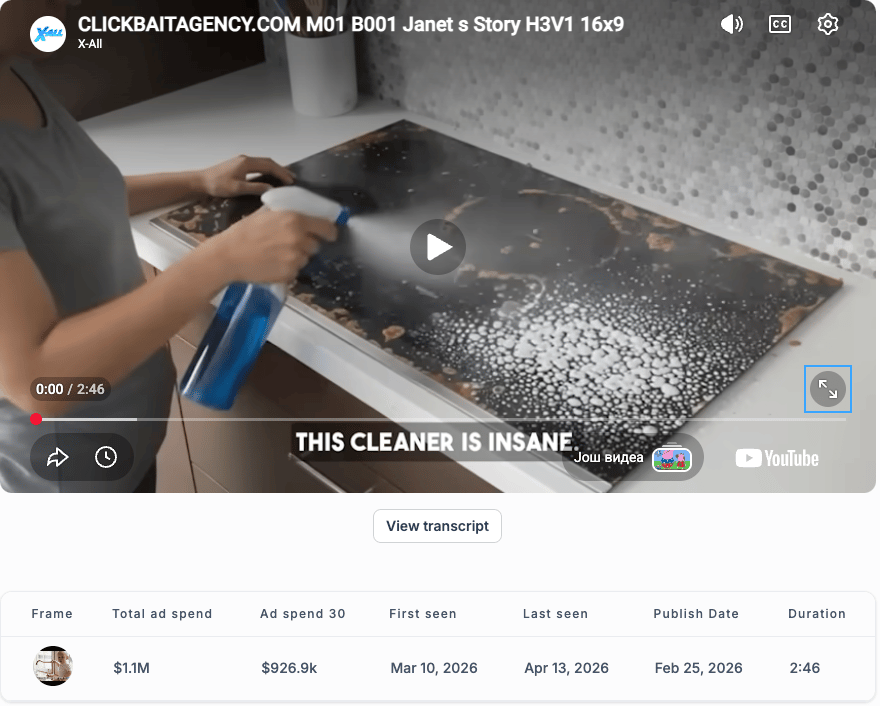
"This cleaner is insane. It removes baked-on oven grease, black mold, and years of soap scum from any surface without scrubbing, without bleach, and without anything you'd be afraid to have around a toddler."
Two sentences. Done. They've named the performance benefit, the safety concern, and the physical effort problem all at once. The word "insane" is doing real work - it signals that what follows will exceed expectations without making a specific claim. And the toddler line lands because it speaks to something most cleaning ads don't bother with: the parent who's already switched to "natural" products and is quietly wondering if they're actually any safer.
Strong Desire Creation hook. The Pain Activation runs just underneath it.
The Bridge: Mechanism + Reframe
This is where the ad earns its money.
Janet's founder story isn't just credibility-building. It's a Reframe Bridge wearing a personal story as a disguise. The ad doesn't say "our product is better than natural cleaners." It explains why every natural cleaner the viewer has already tried was broken by design - the dilution problem, the shelf-stability chemicals, the MIT sitting in bottles sold as clean alternatives.
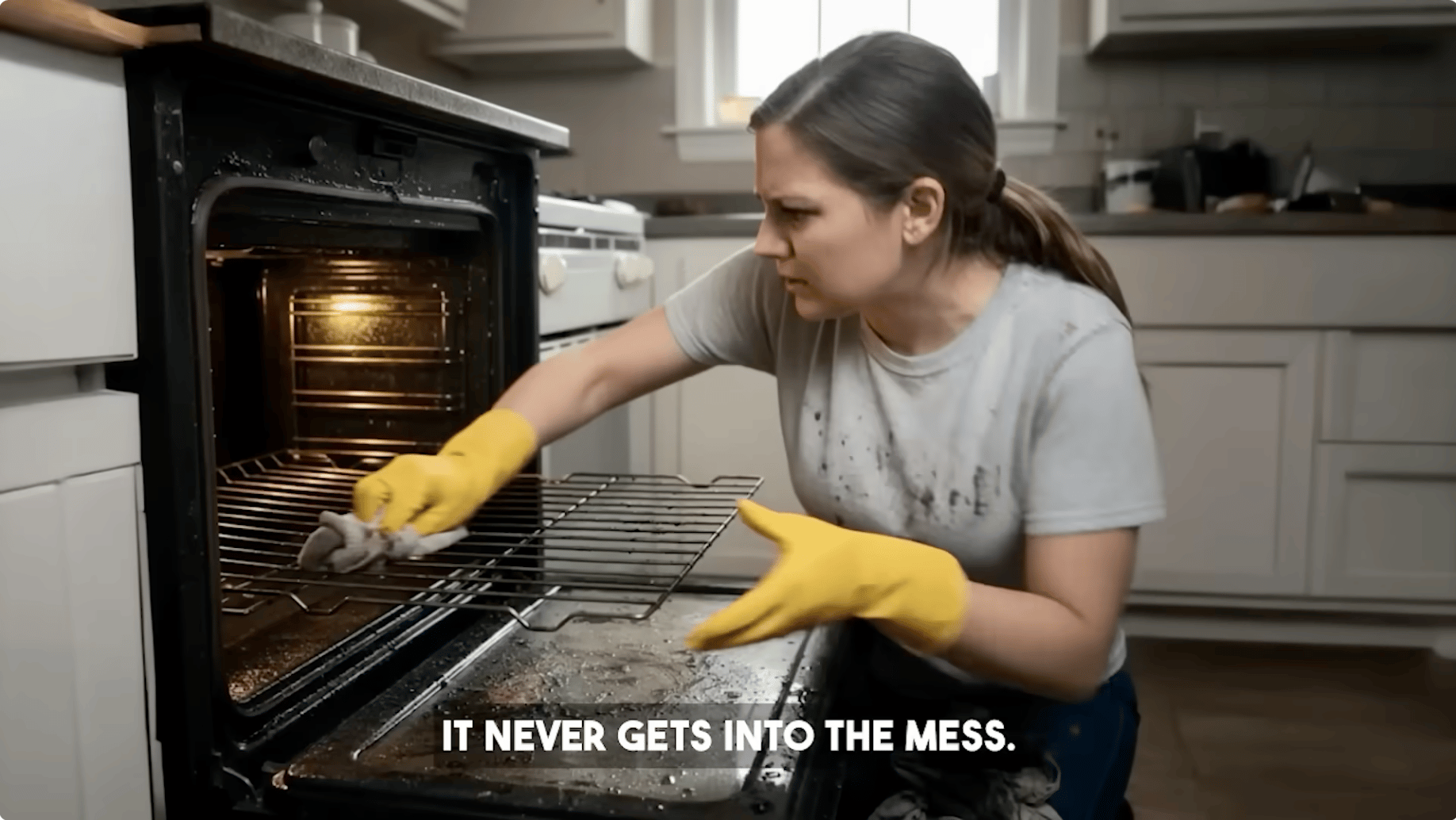
The waxed car analogy is the best single line in the ad. "The liquid just beads up on top, like water on a waxed car. It never gets into the mess." It takes an invisible failure and makes it visual. Suddenly, viewers understand why they've been scrubbing so hard, and the frustration they feel gets redirected at their current cleaner rather than at the category.
That's a clean Reframe. The viewer's model of the world has shifted before the product is even introduced.
The MIT detail tightens it. It's specific, it's verifiable, and it doesn't moralize. Just states a fact and lets the viewer do the math.
The Core: Logic Lock
From here, the ad stacks five moves in order.
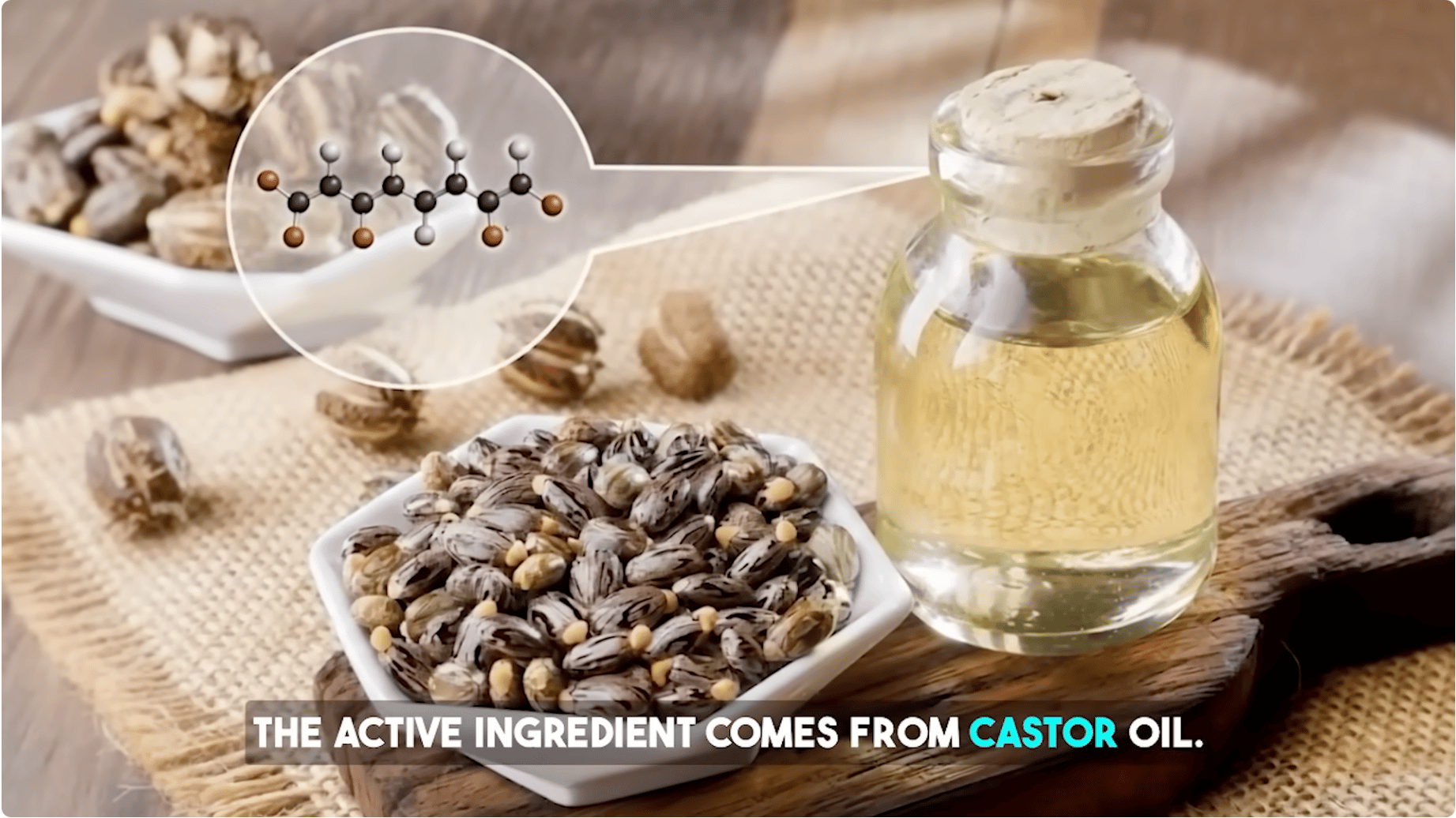
Solution clarity first - castor oil, third-party tested, 100 years of use. The active ingredient gets its own explanation: "spreads into the grime instead of sitting on top of it." One sentence that directly answers the failure mode established in the bridge. That's tight writing.
Then the oven demonstration. Three years of baked-on grease, 30 minutes, one wipe. "That's not an edited video. That's what happens when the formula actually works." Positioning the demo after the mechanism explanation is the right call - viewers who already understand why it should work find the proof more convincing than viewers who are just watching a before-and-after cold.
Social proof next, and it's delivered well. "The ones who said natural can't clean are the ones who reorder the most." That line speaks directly to the skeptic watching - the person who's been burned by weak natural products before and is half-convinced this is more of the same. Turning that exact skeptic into your most loyal customer is one of the most honest credibility signals you can use.
Value and risk removal close it out. 60% off, 30-day guarantee, 10 months from one pack, full ingredient transparency on the label. The transparency callback ("no MIT, nothing hidden") circles back to the bridge and closes the trust loop it opened. Structurally satisfying.
What you can take from this
The founder's story earns a mechanism explanation. A disembodied VO talking chemistry feels like a lecture. A chemist-mum who built this because nothing on the shelf was good enough for her own kid makes the science feel like it matters.
The reframe does more work than any product claim could. By the time the Core lands, viewers aren't just considering X-ALL - they're reconsidering everything under their sink.
And the demo is positioned correctly. Show proof after explanation, not before. Viewers who understand the mechanism first will find the visual confirmation far more convincing.
That's the taxonomy applied. Intro earns the watch, Bridge shifts the belief, Core closes the argument. Three jobs, done in order, nothing wasted.
How do you actually use this to create more ads?
Here's the thing that makes this framework scalable: once you've identified which part is doing which job, you can iterate on each part independently.
Let's say the Mechanism Bridge is what's winning - the explanation of why natural cleaners fail. You don't need to rebuild the whole ad. You can keep that bridge, swap in three different Intros (maybe a Pain Activation instead of Desire Creation, or a Curiosity hook), test them, and see which one gets you better engagement with the bridge itself. Same winning argument, different entry points.
Or the Core works. The demo, the social proof stacking, the risk removal. Keep all that. But try a different bridge. Instead of the founder story, what if you led with Permission ("doctors recommend") or Proof (a lab test)? Same Logic Lock, different belief-building path. Different ad, same conversion structure.
You could even flip the Core approach entirely. This one uses Logic Lock - rational stacking of evidence. What if you built an Identity Close instead? Same intro, same bridge, but instead of listing features and guarantees, you close on who the viewer becomes when they stop scrubbing - more time with their kids, hands that don't hurt, confidence that their home is actually clean and safe. Emotionally different ad, same underlying mechanism.
That's how you get from one winning ad to dozens. You're not starting over each time. You're iterating on a proven structure. You change one variable - the intro type, the bridge approach, the core strategy - and test it. The ones that win become new templates. The structure compounds.
This is why the taxonomy matters practically. It's a replication engine.
One winning ad is great. A system that tells you exactly where to push, what to change, and how to test it without throwing out what's already working - that's what scales a campaign.
At Inceptly, this is how we approach creative for our clients. We don't just analyze what worked and move on. We use the taxonomy to map out where the leverage points are, build variations around them, and test systematically until we have a library of proven angles pulling in the same direction.
If you want to learn how we apply this to your own campaigns, you know where to find us.
Until next time,
Alex and the Inceptly Team
P.S. Want to learn how the Inceptly Creative Taxonomy works in practice and how to use it for your own ad creation process? Drop us a line. We'd love to show you.
Want to brainstorm with us on new ways to scale your business with YouTube Ads (and other performance video platforms)?
Join us for a free YouTube ad brainstorming session here:
| Alex Simic, Creative Director Alex Simic is the person responsible for all creative work that stands behind Inceptly since stepping into his role in 2022. He comes from the role of the Media Buying Team Lead and Strategist behind some of Inceptly’s biggest successes. He has collaborated with the biggest names in the Direct Response industry, whether as a Senior Account Manager & Media Buyer or Creative Director. His main goal is bridging the gap between Media Buying and Creative, ensuring that the videos Inceptly produces are data-based and giving our clients the best chance at achieving success. |
🎯 Inceptly’s top picks:
Essential reading you can't afford to skip

There is always someone on stage explaining the “right” way to run ads. The part nobody says out loud is that if it worked like a recipe, there would be no need for endless conferences, audits, and frameworks.
Today, we get into why real growth comes from sharper questions, not copied answers.

A 3-minute legal lead gen ad built with voiceover, stock footage, and subtitles has spent over $16 million for a reason. Under the surface, every line is doing a very specific job to pull attention, remove objections, and drive action.
This post breaks down the architecture behind it.
Get in touch with us by responding to this email, or tagging us on LinkedIn or Instagram, and sharing your thoughts. Your feedback helps us keep our newsletter relevant and interesting.
