- Inceptly
- Posts
- Non-English ads are quietly printing... Here’s one to steal from💰
Non-English ads are quietly printing... Here’s one to steal from💰
Happy 2026, everyone! |  Author: |
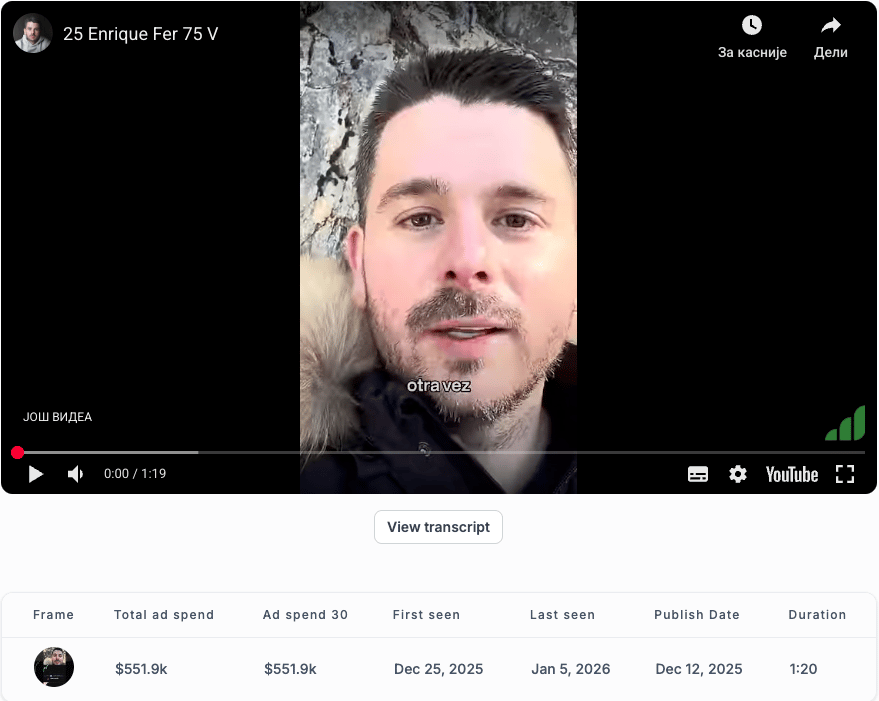
That's what has inspired me to start this year by talking about a Spanish-language ad that's been performing extremely well on YouTube, spending over $500k in less than a month.
This ad is for a financial education program teaching people how to generate additional income, and what makes it interesting is how it tackles a common problem for advertisers - ad fatigue. The presenter literally opens with "appearing in your ads again" and addresses viewer skepticism head-on. Shot with a simple front camera setup and minimal animations, it's proof that production simplicity can still drive results when the messaging is on point.
Want to brainstorm with us on new ways to scale your business with YouTube Ads (and other performance video platforms)?
Join us for a free YouTube ad brainstorming session here:
Let's break down what's making this ad effective.
The hook is self-aware and direct: "Appearing in your ads again. How is this possible?" Right away, he's acknowledging that viewers have probably seen his ads before, turning potential annoyance into curiosity.
What follows is a logical explanation of why he keeps appearing - a chain of reasoning that positions his continued ad presence as proof of success rather than just persistence.
Here's what makes this ad work:
1. Addressing ad fatigue
Instead of ignoring the fact that viewers might be tired of seeing his ads, he makes it the opening point. This self-awareness disarms potential negativity.
2. Logical proof chain
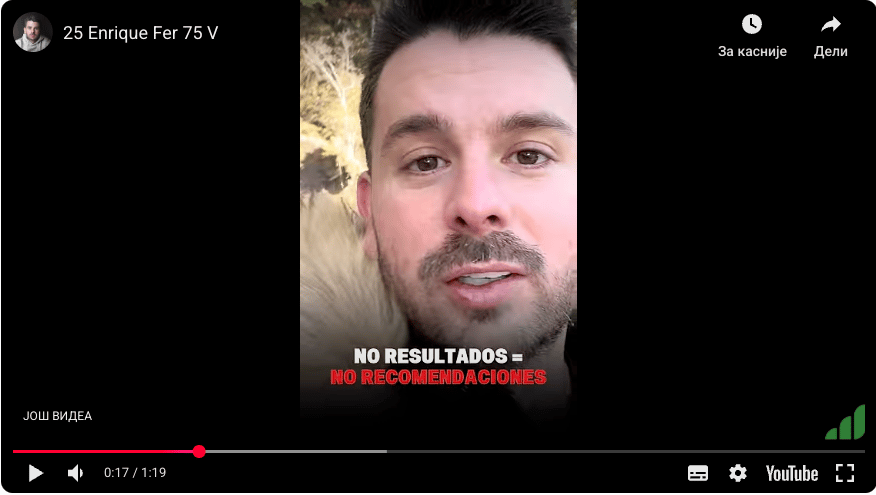
"If my students didn't have results, there wouldn't be recommendations. If there weren't recommendations, I wouldn't have new students. If I didn't have new students, there wouldn't be revenue to pay for ads." It's a simple but effective logical argument for why his continued ad presence proves his program works.
3. Acknowledging different viewer reactions
He voices what viewers are thinking: "This guy is annoying" or "I'll look at it later." By acknowledging these reactions, he's showing he understands his audience.
He mentions teaching over 50,000 people for more than 6 years. These specific numbers add credibility to his claims.
5. Tapping into economic anxiety
He addresses real concerns - housing affordability, rising costs, stagnant wages. This grounds his offer in genuine pain points his audience is experiencing.
6. Reframing the offer
"Generating a second income source is no longer an option, it's a necessity." He's positioning his program not as a nice-to-have, but as essential in the current economic climate.
7. Presenting a choice
"You can try on your own and see if you get lucky, or try with someone who's been teaching this for over 6 years to more than 50,000 people." He's framing the decision as between struggling alone or learning from experience.
8. Clear preview of what's next
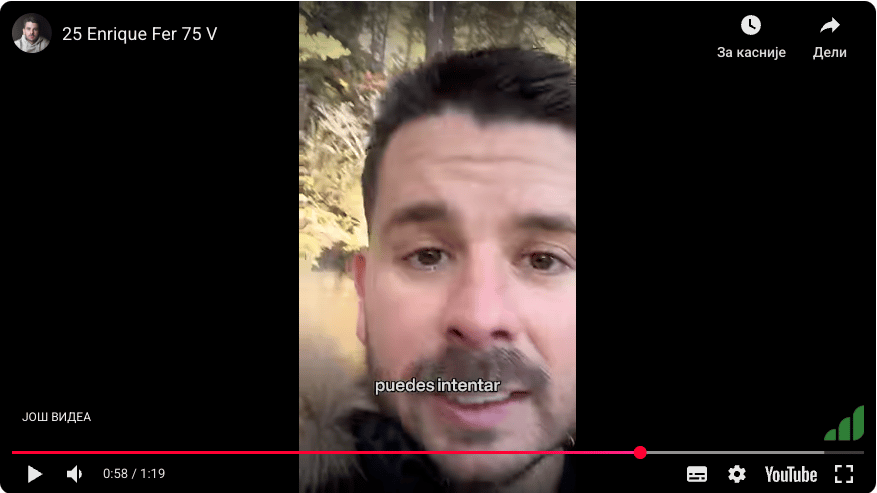
He tells viewers exactly what they'll learn in the next video - who he is, what this is, how much they can earn, and how to start. This transparency reduces uncertainty about clicking through.
9. Simple CTA
"Click and I'll see you inside." Direct and conversational.
What's particularly smart about this ad is how it turns a potential weakness (appearing repeatedly in people's feeds) into a strength. Most advertisers try to ignore ad fatigue, but this presenter makes it his opening argument for credibility.
The production simplicity also works in his favor. A front-facing camera and basic animations keep the focus on the message rather than the production. For financial education content, this stripped-down approach can actually build more trust than overly polished production might.
The logical chain he presents is also clever. It's essentially saying, "I can afford to keep advertising because my program works and people recommend it." It's a simple argument, but it's effective because it makes sense.
Here's what you can learn from this ad:
Address ad fatigue directly: If viewers are seeing you repeatedly, acknowledge it and use it as proof of success.
Use logical chains: Simple cause-and-effect reasoning can be persuasive.
Voice viewer objections: Show you understand what they're thinking.
Ground your offer in real problems: Economic anxiety, rising costs - these are genuine concerns.
Reframe from want to need: Position your solution as essential, not optional.
Be transparent about what's next: Tell viewers exactly what they'll get when they click.
Keep production simple: For certain offers, basic production can build more trust.
The structure of this ad is worth studying:
Self-aware hook (appearing again)
Logical proof of success (the recommendation chain)
Acknowledging viewer reactions
Social proof (6 years, 50,000 people)
Economic context (why this matters now)
Reframing the offer (necessity vs. option)
Presenting the choice (alone vs. with guidance)
Preview of next steps
Clear call to action
What's also interesting is how this ad handles credibility without traditional testimonials or elaborate proof. The logic itself becomes the proof - "I'm still here advertising because it works" is a simple but effective argument.
The economic framing is particularly smart for the Spanish-speaking market. By addressing housing affordability, rising costs, and stagnant wages, he's tapping into concerns that resonate deeply with his audience. It's not abstract financial education; it's a solution to real, pressing problems.
The choice he presents is also well-framed. "Try on your own and see if you get lucky" versus learning from someone with 6 years of experience teaching 50,000+ people. It's not a hard sell, but it makes the decision seem obvious.
What's worth noting is how this ad doesn't overpromise. He's not claiming you'll get rich quickly or make millions. He's talking about generating "additional income" and a "second income source." This measured approach likely helps with both compliance and credibility.
The simplicity of the production also makes this ad feel more accessible. There's no fancy studio, no elaborate graphics - just a person talking directly to camera. For an offer about generating additional income, this stripped-down approach reinforces the message that this is achievable for regular people.
For those of you creating ads in international markets or non-English speaking audiences, here are some key takeaways:
Cultural context matters: Economic concerns vary by market. Understand what's keeping your specific audience up at night.
Simple production can build trust: Especially for financial or educational offers, overly polished production can create distance.
Logic can be as persuasive as emotion: A clear, rational argument for why your offer works can be powerful.
Address the elephant in the room: If viewers are seeing you repeatedly, acknowledge it rather than ignoring it.
Be specific with social proof: "50,000 people over 6 years" is more credible than "thousands of satisfied customers."
Frame your offer appropriately: Not every offer needs to promise life-changing results. Sometimes "additional income" is more believable and effective.
The success of this ad also shows that effective direct response advertising transcends language and market. The principles - addressing objections, providing social proof, creating urgency, making action easy - work whether you're advertising in English, Spanish, or any other language.
What's particularly effective here is the conversational tone. Even without understanding Spanish, you can tell from the delivery that this feels like a person talking to you, not a company selling to you. That personal connection is valuable regardless of the language.
For those of you advertising in multiple markets, this ad is a good reminder that you don't need to reinvent your entire approach for each market. The core principles remain the same; you just need to adapt the specific pain points and cultural context to resonate with each audience.
So, what's the bottom line? This ad proves that simple production, direct messaging, and smart positioning can drive results. You don't need elaborate production or complex strategies. You need to understand your audience, address their real concerns, and present your solution in a way that makes sense.
And hey, if you're looking to create ads that work across different markets and languages, or if you want to discuss how to adapt your messaging for specific audiences while maintaining effectiveness, you know where to find us. At Inceptly, we work with clients across multiple markets and understand how to make direct response principles work regardless of language or location.
Until next time, keep testing, keep refining, and remember - good messaging transcends language barriers.
Cheers,
Alex and the Inceptly Team
P.S. Running ads in international markets? Want to discuss how to adapt your approach while maintaining what works? Drop us a line. We're always interested in helping businesses scale across different audiences and markets.
Want to brainstorm with us on new ways to scale your business with YouTube Ads (and other performance video platforms)?
Join us for a free YouTube ad brainstorming session here:
| Alex Simic, Creative Director Alex Simic is the person responsible for all creative work that stands behind Inceptly since stepping into his role in 2022. He comes from the role of the Media Buying Team Lead and Strategist behind some of Inceptly’s biggest successes. He has collaborated with the biggest names in the Direct Response industry, whether as a Senior Account Manager & Media Buyer or Creative Director. His main goal is bridging the gap between Media Buying and Creative, ensuring that the videos Inceptly produces are data-based and giving our clients the best chance at achieving success. |
🎯 Inceptly’s top picks:
Essential reading you can't afford to skip
This AI indoor walking app ad cleared $1M+ in YouTube ad spend.
The wild part: it’s simple, direct, and built around a few smart persuasion moves most advertisers ignore.
We broke down the hook, the structure, and why it keeps scaling.
These were our most-read posts of H2 2025 — and it wasn’t by accident.
Each one hit a real tension founders and media buyers are dealing with right now: creative fatigue, misleading metrics, and ads that quietly scale while others stall.
We broke down why these posts landed and what patterns kept showing up.
If you want to see what actually resonates with serious advertisers, this is a good place to start:
Get in touch with us by responding to this email or tagging us on LinkedIn or Instagram and sharing your thoughts. Your feedback helps us keep our newsletter relevant and interesting.
