- Inceptly
- Posts
- This meal ad spent $2.6M for a reason🤯
This meal ad spent $2.6M for a reason🤯
Most video ads disappear into the void. But when you see the same ad running month after month, racking up an estimated $2.6 million in spend, you know something's working. This Factor meal delivery ad isn't just another piece of creative - it's a direct response machine that's been tested, proven profitable, and scaled hard. |  Author: |
What makes it work? The same principles that sold products through mail for decades are now expertly adapted for the scroll-and-tap world of social media feeds.
Let's dissect exactly how this ad applies battle-tested direct response techniques to generate returns worth millions in ad spend.
Want to brainstorm with us on new ways to scale your business with YouTube Ads (and other performance video platforms)?
Join us for a free YouTube ad brainstorming session here:
The pattern interrupt that stops the scroll
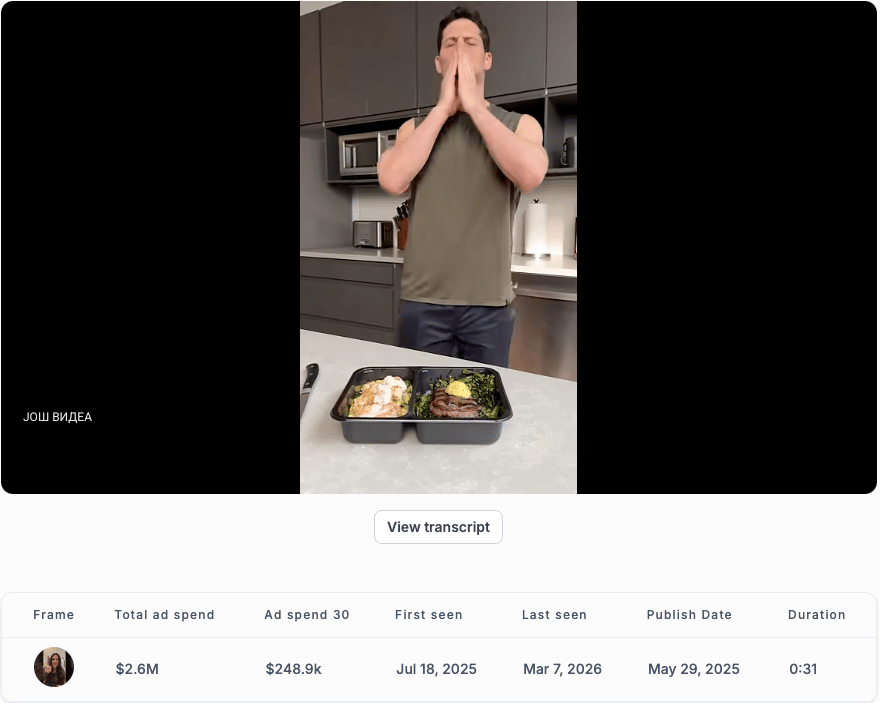
"I wasn't trying to lose 8 lbs. But then this happened."
This opening line does something crucial in the first three seconds: it creates a pattern interrupt. In a feed full of people trying to sell weight loss, this ad opens with the opposite claim. The protagonist wasn't even trying, yet got results anyway. This surprise element is the digital equivalent of attaching a penny to a sales letter - it's unexpected, it creates curiosity, and it makes people stop.
The visual reinforces this with an exaggerated reaction shot. The viewer's brain registers surprise, and that split-second of curiosity is enough to prevent the scroll. In direct mail, your envelope had to get opened. In social media advertising, your first three seconds have to stop thumbs. This ad nails it by leading with an intriguing contradiction that speaks directly to a core desire.
Laser-focused on what the audience actually wants
Every word in this ad focuses relentlessly on the viewer's desires and pain points, not the company's features. Notice the ad doesn't open with "Factor is a meal delivery service founded in..." Instead, it leads with a result people desperately want: effortless weight loss.
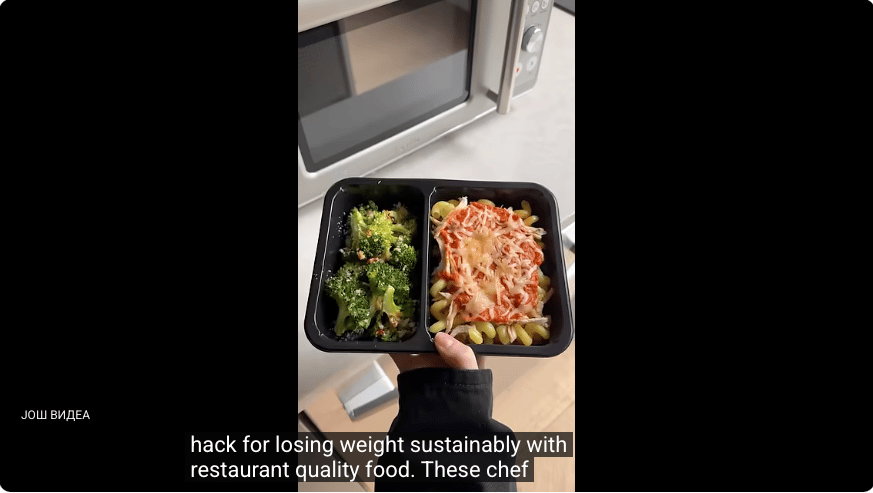
The word "sustainably" does heavy lifting here. It acknowledges the real problem -people have tried diets before and failed. They've lost weight only to gain it back. By addressing sustainability upfront, the ad speaks to a sophisticated audience that's been burned by extreme diets and quick fixes. This is understanding your market at a deep level.
The protagonist is relatable: someone eating real food in a real kitchen, not a fitness model in a gym. This signals to the target audience - busy people who want results without becoming diet obsessives - that this solution is for them.
Benefits stack upon benefits
Watch how the copy systematically removes every objection and barrier:
"Restaurant quality food" – It won't taste like diet food "Chef made meals" – Professional quality, not amateur "Takes the guesswork out" – You don't need to become a nutrition expert "Everything's pre-portioned" – No measuring or math "Dietitian approved" – Safe and credible "I'm not counting calories" – No tedious tracking "I'm not even cooking" – Saves time and effort "2 minutes" – Specific, fast timeframe "No prep, no kitchen cleanup" – Removes even more friction
Each line answers the question: "What's in it for me?" The ad never talks about the company's values, mission, or how many meals they've delivered. It's purely focused on removing obstacles between the viewer and their desired outcome.
This is benefit-driven copywriting at its finest. The features (pre-portioned, delivered weekly, keto options) are only mentioned in service of benefits (no counting, no cooking, no extreme diets).
Visual proof builds belief
Video advertising has a massive advantage over traditional direct mail: the ability to show, not just tell. This ad leverages that brilliantly.
Viewers see the Factor box arriving, being unpacked, stored in the fridge, heated in the microwave, and finally eaten. This visual journey removes skepticism. The meals look genuinely appetizing - not like typical diet food. Multiple varieties are shown, proving there's choice and preventing the "I'll get bored" objection.
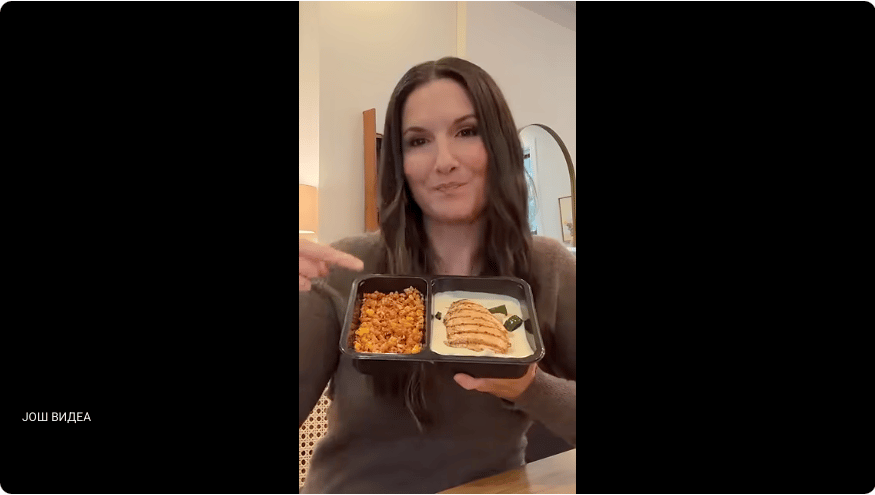
The real-person testimonial format provides social proof. This isn't a professional actor in a studio; it's shot in a real kitchen. The casual, authentic delivery style makes the testimonial believable. When multiple people are shown enjoying the meals, it reinforces that this works for different types of people.
The specificity of "8 lbs in 8 weeks" gives a concrete, believable result. It's not "lose 30 pounds in 30 days" - it's a reasonable outcome that doesn't trigger skepticism.
The offer makes the decision easy
After building desire and removing objections, the ad closes with a strong offer: "50% off your first box."
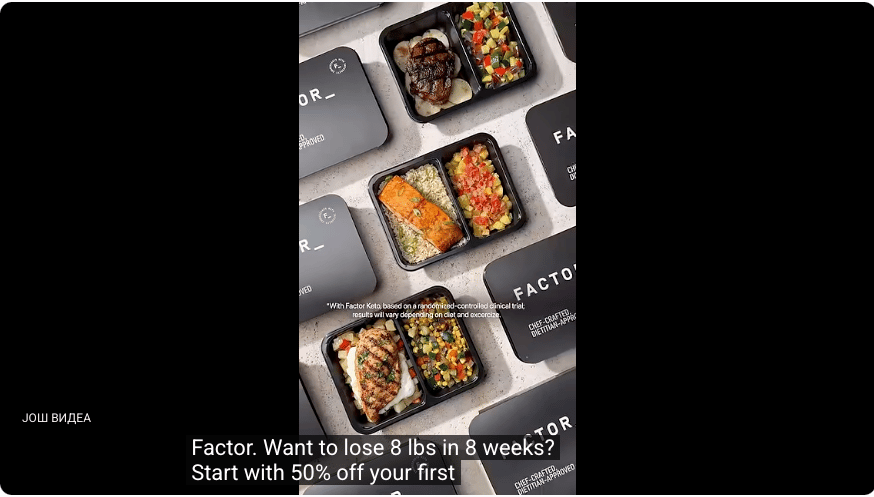
This is a classic direct response - make a compelling offer that reduces financial risk. Fifty percent off is significant enough to motivate action. It acknowledges that trying something new involves risk, and it makes that risk smaller.
The final call-to-action ties everything together: "Want to lose 8 lbs in 8 weeks? Start with 50% off your first box." It restates the core desire and makes the next step obvious. There's no confusion about what to do next.
Why this ad gets massive spend
A $2.6 million ad spend indicates this creative has been tested, proven profitable, and scaled aggressively. The company isn't spending that money on hope - they're spending it because the numbers work.
This ad succeeds because it follows fundamental direct response principles:
It grabs attention immediately with curiosity
It identifies and speaks to a specific audience's desires
It focuses relentlessly on benefits, not features
It removes objections systematically
It provides proof and credibility
It makes a strong offer that reduces risk
It ends with a clear, compelling call-to-action
The modern application of timeless principles
What's fascinating is how seamlessly old-school direct response principles translate to video. The personal, testimonial-style delivery mimics the "honest-to-God personal letter" approach. The benefit-stacking mirrors classic sales letter structure. The visual proof elements do what detailed product descriptions once did in mail-order catalogs.
For direct response marketers, the lesson is clear: the fundamentals never change. Whether you're crafting an envelope teaser or the first three seconds of a video ad, your job is to stop people, speak to their desires, remove their objections, and make buying easy.
This Factor ad is a masterclass in doing exactly that - and the company's willingness to spend millions scaling it proves that when you get the fundamentals right, the medium doesn't matter. Results do.
P.S. If you want to build ads that do more than spike for a week, Inceptly helps brands turn direct response principles into scalable creative systems that can hold spend over time.
Let’s break down your funnel and see where scale is hiding!
Most brands wait too long to find out why YouTube isn’t working. We’ll show you what to test — and what to kill:
 | Jelena Denda Borjan, Staff Writer Drawing from her background in investigative journalism, Jelena has an exceptional ability to delve into any subject, no matter how complex, dig deep, and present information in a clear and accessible manner that empowers readers to grasp even the most intricate concepts with ease. |
🎯 Inceptly’s top picks:
Essential reading you can't afford to skip
Before the first $1M in ad spend, it’s easy to think success comes from finding the right ad, moving fast, and watching the numbers closely.
This piece breaks down the harder truth: great media buying has less to do with hacks inside the ad account and more to do with building a system, staying calm under pressure, knowing when the real issue is the offer, and learning how to think clearly when the data gets messy.
If you spend media dollars, this is the kind of article that can save you from some very expensive lessons.
Most ads for sensitive products either feel awkward, overhyped, or instantly untrustworthy. This one takes a different route. By using a couple’s dynamic, natural conversation, and just enough specificity to build belief, it turns a taboo topic into a testimonial that feels surprisingly believable.
In the full post, we break down exactly how the ad works through Inceptly’s creative taxonomy and why this structure is so effective for selling products people do not always feel comfortable talking about.
Get in touch with us by responding to this email or tagging us on LinkedIn or Instagram and sharing your thoughts. Your feedback helps us keep our newsletter relevant and interesting.
